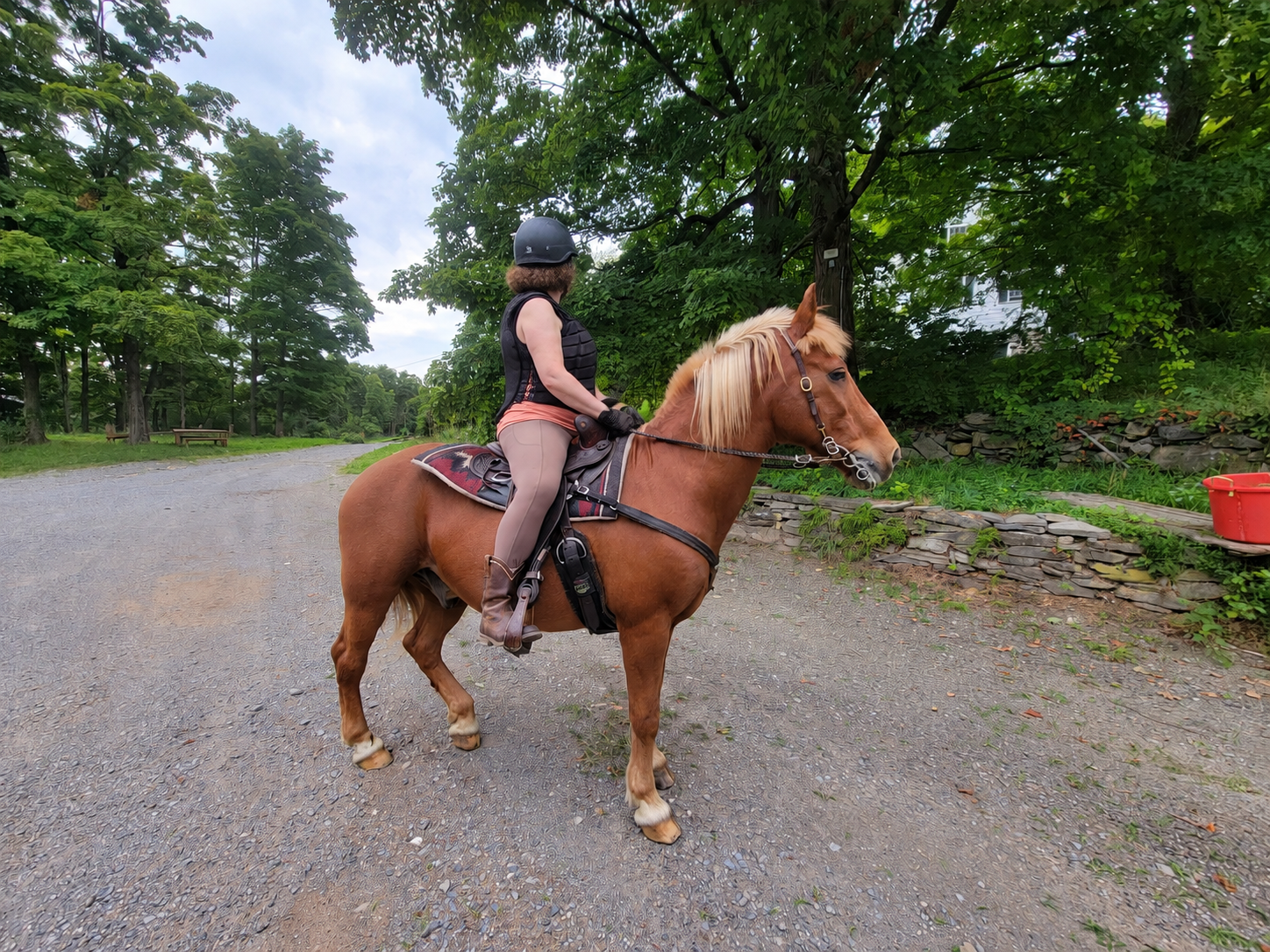
One of the biggest advantages of boarding in the Hudson Valley is experiencing four distinct riding seasons.
At Carlette Farm in Hyde Park, NY, our approximately 30 miles of private trails allow riders to adapt their conditioning program year-round — something many Northeast boarding facilities simply can’t offer.
Here’s what seasonal trail riding looks like in Dutchess County, supported by equine veterinary and performance research.
 Spring Riding in the Hudson Valley
Spring conditioning should be gradual and progressive. According to the American Association of Equine Practitioners (AAEP), returning horses to work after downtime requires structured increases in duration and intensity to reduce soft tissue strain.
Trail advantages in spring:
-
Long, relaxed hacks to rebuild aerobic base
-
Controlled exposure to varied footing
-
Gradual hill work to strengthen hindquarters
-
Mental reset after indoor-heavy winter programs
For conditioning guidance, the AAEP’s fitness recommendations and articles on safe return-to-work protocols provide an excellent framework.
 Summer Conditioning on Wooded Trails
Heat and humidity require thoughtful workload management. The University of Pennsylvania School of Veterinary Medicine (New Bolton Center) publishes research on thermoregulation and hydration in performance horses.
Trail riding in summer offers:
-
Natural shade from wooded paths
-
Long, steady aerobic conditioning sets
-
Adjustable intensity without drilling arena patterns
For riders developing cardiovascular fitness safely, the United States Eventing Association (USEA) conditioning guidelines outline structured interval and long-distance work principles that adapt well to varied terrain.
Conditioning doesn’t require endless circles. It requires consistency and thoughtful progression.
 Fall Trail Riding in Dutchess County
Fall offers prime footing and cooler air — ideal for advancing fitness.
The United States Equestrian Federation (USEF) emphasizes cross-training and varied terrain as key components in building durable sport horses.
Benefits of fall trail work:
-
Hill sets for cardiovascular sharpening
-
Natural jumps for confidence and balance
-
Terrain exposure that improves proprioception
The USEF and USEA both recognize that diverse conditioning environments reduce repetitive strain while improving overall performance readiness.
This is where access to 30 private miles becomes more than scenic — it becomes strategic.
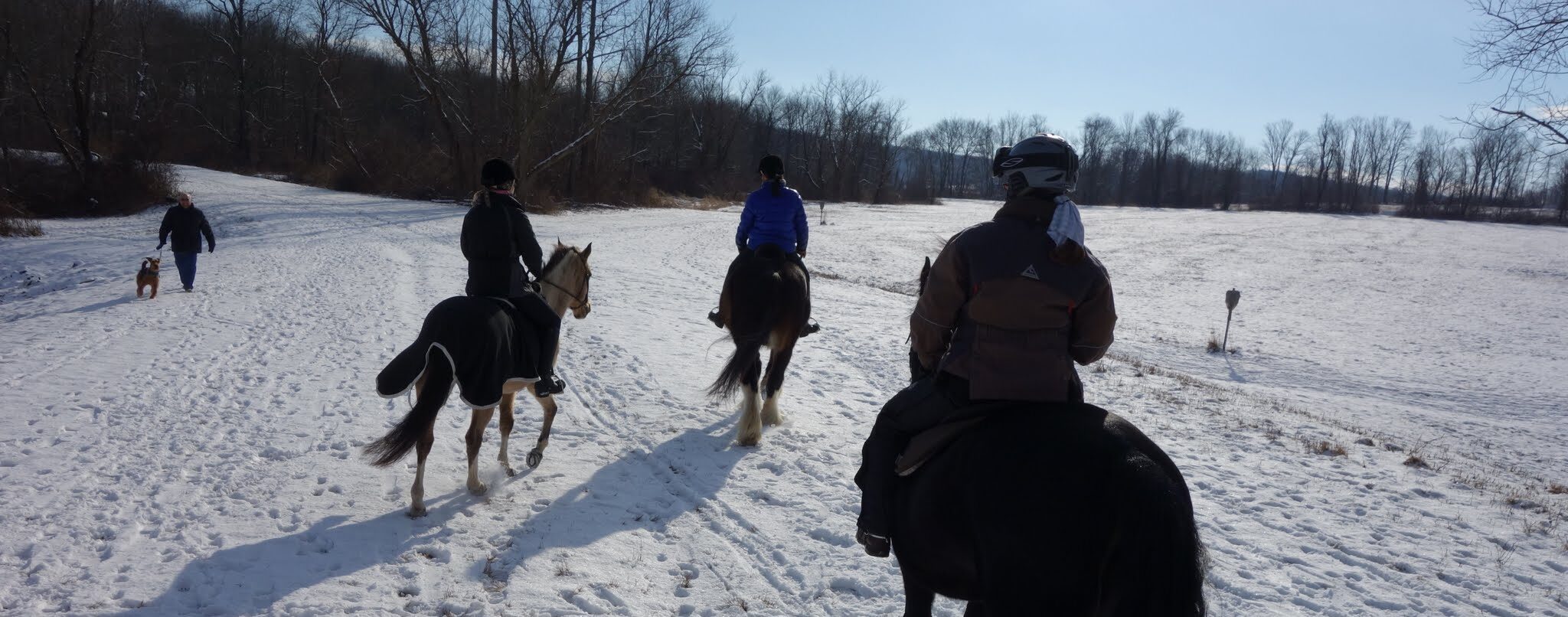
 Winter Trail Riding in Hyde Park, NY
Winter riding requires caution and smart footing assessment.
Cornell University’s Cornell University College of Veterinary Medicine provides guidance on cold-weather management, joint care, and maintaining fitness during reduced daylight months.
When conditions allow, trail riding in winter can:
-
Maintain baseline cardiovascular fitness
-
Prevent mental burnout from arena-only programs
-
Provide low-intensity steady work
Because Carlette Farm’s trail network is private and directly accessible from the barn, riders can assess footing and choose appropriate routes without navigating public trail congestion.
Why Seasonal Variety Builds Better Horses
Research across veterinary and performance organizations consistently supports:
-
Progressive conditioning
-
Varied terrain exposure
-
Cross-training outside repetitive ring patterns
Organizations like the AAEP, USEF, and USEA all advocate structured conditioning that builds durability while reducing overuse injuries.
A 30-mile private trail system allows riders to apply these principles naturally — within their everyday routine.
That’s the difference between occasional trail access and true on-site mileage.
Boarding at Carlette Farm: A Year-Round Riding Environment
In much of Dutchess County, winter limits riding options. Summer increases arena fatigue. Public trails require hauling.
At Carlette Farm, riders adapt with the seasons because the terrain is already here.
-
Progressive spring reconditioning
-
Summer shaded aerobic miles
-
Fall performance sharpening
-
Thoughtful winter maintenance
The result?
More durable horses.
More confident riders.
More variety built into daily work.
And that’s not common in the Hudson Valley.
To download our Seasonal Conditioning Planner, CLICK HERE