A Local Solution to a Growing Regional Challenge
Across the Hudson Valley, livestock and equine farms are facing the same pressure: rising hay and feed costs, inconsistent supply, and increasing reliance on third-party producers. These challenges don’t just affect individual farms—they threaten the long-term sustainability of our agricultural landscape.
In response, a group of farms in Pleasant Valley, New York has come together to build a different model.
The Pleasant Valley Hay Farmers’ Cooperative is a collaborative, farmer-led initiative designed to bring hay production back under local control—improving efficiency, reducing costs, and strengthening the long-term viability of participating farms.
What the Cooperative Actually Does
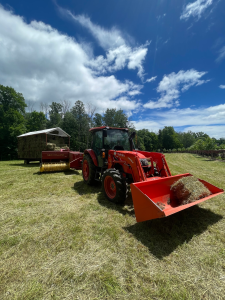
At its core, the cooperative is simple and practical:
-
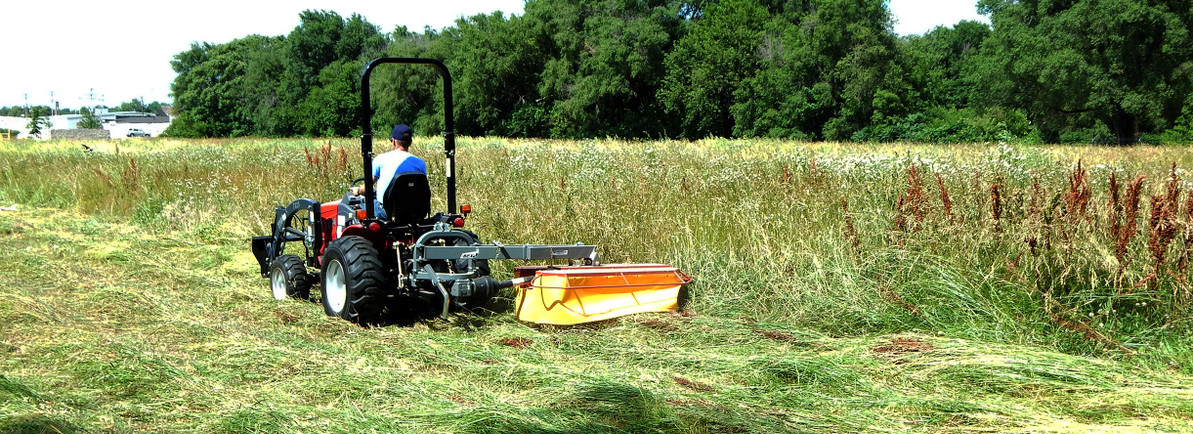
Farms share access to hay production equipment
-
Acreage is coordinated across multiple properties
-
Labor and timing are aligned to maximize yield and quality
-
Hay is produced locally and distributed among participating farms
By working together instead of independently, the cooperative significantly reduces the need to purchase hay at volatile market rates—while improving consistency and control over forage quality.
Backed by Cornell Cooperative Extension
A key strength of this initiative is its connection to
Cornell Cooperative Extension of Dutchess County.
Cornell Cooperative Extension plays an important role in supporting agricultural innovation across New York State, and their involvement provides:
-
Technical guidance on forage production and land management
-
Support in developing efficient and sustainable practices
-
Credibility and alignment with regional agricultural priorities
This partnership reinforces that the cooperative is not just an idea—it’s a grounded, supported effort aligned with best practices in New York agriculture.
Why This Matters (Beyond Just Hay)
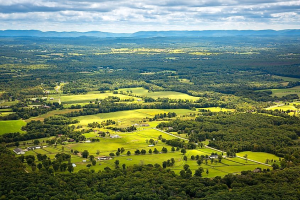
This effort goes beyond producing hay.
It’s about:
-
Keeping farmland in active agricultural use
-
Reducing financial pressure on small and mid-sized farms
-
Creating opportunities for younger farmers to gain hands-on experience
-
Strengthening the local agricultural economy through cooperation instead of competition
In short, it’s a model for how farms can remain viable in a changing economic landscape—without sacrificing independence.
A Model Designed to Grow
The Pleasant Valley Hay Farmers’ Cooperative is intentionally structured to expand.
As equipment capacity increases and additional acreage is brought into production, more farms can participate—spreading the benefits of coordinated, local hay production across the region.
This is not a closed system. It’s a growing network.
Interested in Getting Involved?
We are actively speaking with:
-
Landowners with hayable acreage
-
Farms interested in participating in shared production
-
Agricultural partners aligned with strengthening local food systems
Whether you are currently purchasing hay, maintaining unused fields, or looking to be part of a more collaborative agricultural model, we welcome the conversation.
To inquire about participation or partnership opportunities, please contact us directly through Carlette Farm.
Looking Ahead
The future of agriculture in the Hudson Valley will depend on practical, scalable solutions like this—initiatives that reduce costs, build resilience, and keep working farms working.
The Pleasant Valley Hay Farmers’ Cooperative is one step in that direction.
Pleasant Valley Hay Farmers’ Cooperative: A Scalable Model for Hudson Valley Hay Production
Rebuilding Local Hay Production in New York’s Hudson Valley
Across the Hudson Valley, farms are facing a shared challenge:
reliable, affordable hay is getting harder to secure.
Rising prices, inconsistent supply, and dependence on third-party producers have made forage one of the most unpredictable—and costly—inputs for equine and livestock operations.
The Pleasant Valley Hay Farmers’ Cooperative was formed to address this directly.
This farmer-led initiative is focused on restoring local hay production capacity in New York, creating a more stable, cost-effective system rooted in collaboration rather than dependency.
A Cooperative Model Built on Working Farms
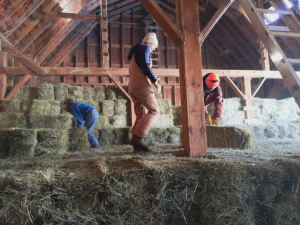
The cooperative brings together multiple farms in Pleasant Valley to coordinate:
-
Shared hay production equipment
-
Managed acreage across participating properties
-
Timing of cutting, tedding, raking, and baling
-
Distribution of finished hay among member farms
At the center of this effort is Carlette Farm, a 300+ acre equestrian and agricultural operation that serves as the lead coordinating farm—helping align equipment, acreage, and production schedules across the cooperative.
Rather than operating as a standalone project, the cooperative is built directly on top of active, working farms already managing significant acreage and forage demand, allowing it to scale efficiently from day one.
Supported by Cornell Cooperative Extension
A critical component of the cooperative’s development is its alignment with Cornell Cooperative Extension of Dutchess County.
Through this connection, the initiative benefits from:
-
Region-specific expertise in forage management
-
Guidance on sustainable land use and yield optimization
-
Access to agricultural best practices across New York State
This backing reinforces that the cooperative is not experimental—it is grounded in proven agricultural frameworks and supported by one of the most respected extension networks in the country.
Why Local Hay Production Matters
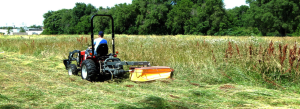
Expanding Hudson Valley hay production isn’t just about cost savings—it’s about long-term agricultural resilience.
By producing hay locally, farms can:
-
Reduce exposure to volatile feed markets
-
Improve consistency and quality of forage
-
Keep agricultural land actively managed and productive
-
Support a stronger, more interconnected local farm economy
This model also creates hands-on opportunities for the next generation of farmers to gain real experience in forage production—an area that is increasingly underserved.
Designed to Expand Across New York
The Pleasant Valley Hay Farmers’ Cooperative is intentionally structured as a scalable model for hay production in New York State.
As additional equipment is acquired and more acreage is brought into rotation, the cooperative can expand to include:
-
Additional farms seeking relief from high hay costs
-
Landowners with underutilized hay fields
-
Regional partners interested in collaborative agriculture
This is not a fixed group—it’s a growing system designed to extend beyond Pleasant Valley over time.
How to Get Involved
We are currently connecting with:
-
Farms interested in participating in a shared hay production system
-
Landowners with hayable acreage in Dutchess County and surrounding areas
-
Agricultural partners aligned with strengthening local forage production in the Hudson Valley
If you are currently purchasing hay, managing unused fields, or exploring more sustainable farm operations, this cooperative may be a strong fit.
Inquiries can be directed through Carlette Farm (heather@carlettefarm.com) to learn more about participation, partnerships, and upcoming expansion opportunities.
A Practical Path Forward for Hudson Valley Agriculture
The future of farming in the Hudson Valley will depend on practical, scalable solutions that reduce costs while strengthening local production.
The Pleasant Valley Hay Farmers’ Cooperative represents one of those solutions—built by working farms, supported by trusted institutions, and designed to grow.